





















Buyer guides
Faux leather or fabric: which upholstery for restaurant, hotel and care home chairs?
Faux leather wipes clean; fabric breathes and resists punctures. What the sources say, what infection-control guidance asks in care homes, and what to ask.
The short answer
| Faux leather (vinyl) | Contract fabric | |
|---|---|---|
| Cleaning | Easy to clean, resists common stains, can be disinfected (sources 1 and 2) | Performance-treated fabric resists stains and cleans easily (source 1) |
| Odours | – | Can absorb odours that are hard to remove (source 1) |
| Tears and punctures | Can be punctured by common objects such as pens (source 1) | Good upholstery fabrics are chosen to resist tears and punctures (source 1) |
| Warm rooms | Does not breathe, so it can be uncomfortable when it is warm (source 1) | Breathes better than vinyl (source 1) |
| Sunlight | Standard vinyl should be kept out of direct sunlight (source 2) | Not covered by the sources |
| Look | Close to real leather, for less money (source 1) | Depends on the fibre blend (source 1) |
The sources do not agree on everything. One chair maker says vinyl "isn't the most durable" (source 1). An upholstery supplier recommends vinyl for commercial interiors because of its durability (source 2). Both are sellers, so check the test results of the exact material.
Restaurants and cafés
- Many covers a day, families, sauces: faux leather is the quickest to wipe between sittings.
- A warm room, or a terrace in summer: faux leather can feel hot to sit on, and standard vinyl should not stand in direct sun (sources 1 and 2).
- Long dinners: fabric breathes better. Choose a performance-treated fabric with a good abrasion rating. Our contract grade guide explains the Martindale numbers.
Hotels and events
Hotel restaurants and function rooms face the same choice as restaurants. For banquet chairs that are moved, stacked and wiped many times a week, ask how the seat cover handles being knocked and scraped, not only how it cleans.
Care homes: the strictest rules
Infection-control guidance for health care settings in Ontario, Canada, which also covers long-term care, says (source 3):
- upholstered furniture in care areas must be covered with material that is fluid-resistant, non-porous and can take hospital-grade disinfectants;
- porous upholstered furniture should not be used in care areas, especially where residents have weak immune systems;
- seams can trap bacteria and are hard to clean;
- torn or damaged cloth furnishings should be replaced.
A Canadian health authority's furniture guide goes further: vinyl is required in high-risk areas, such as patient rooms and waiting rooms. Durable, cleanable fabrics are acceptable in low-risk areas, such as offices without direct care (source 4).
These are Canadian documents. Your own country's guidance and your infection-control team decide. But they explain why infection-control teams ask for wipe-clean covers in resident areas.
"Faux leather" is not one material
- Faux leather is usually PVC (vinyl) or polyurethane (PU).
- One supplier writes that for health care, vinyl or high-grade fabric has advantages over polyurethane (source 1).
- So ask your supplier which material it is, and how it is tested: abrasion, cleaning with disinfectants, and fire.
Checklist before you order
1. Faux leather: PVC (vinyl) or polyurethane?            ____
2. Abrasion test result (fabric: Martindale rubs):     ____
3. Which cleaners and disinfectants are allowed?        ____
4. Fire test for your country (see our fire guide):     ____
5. Seams: how many, and are they sealed?                ____
6. Sun: will the chairs stand by a window or outside?   ____
7. Can the seat be re-covered later?                    ____
For fire rules, see fire safety rules for upholstered contract seating.
What RikoStyle offers
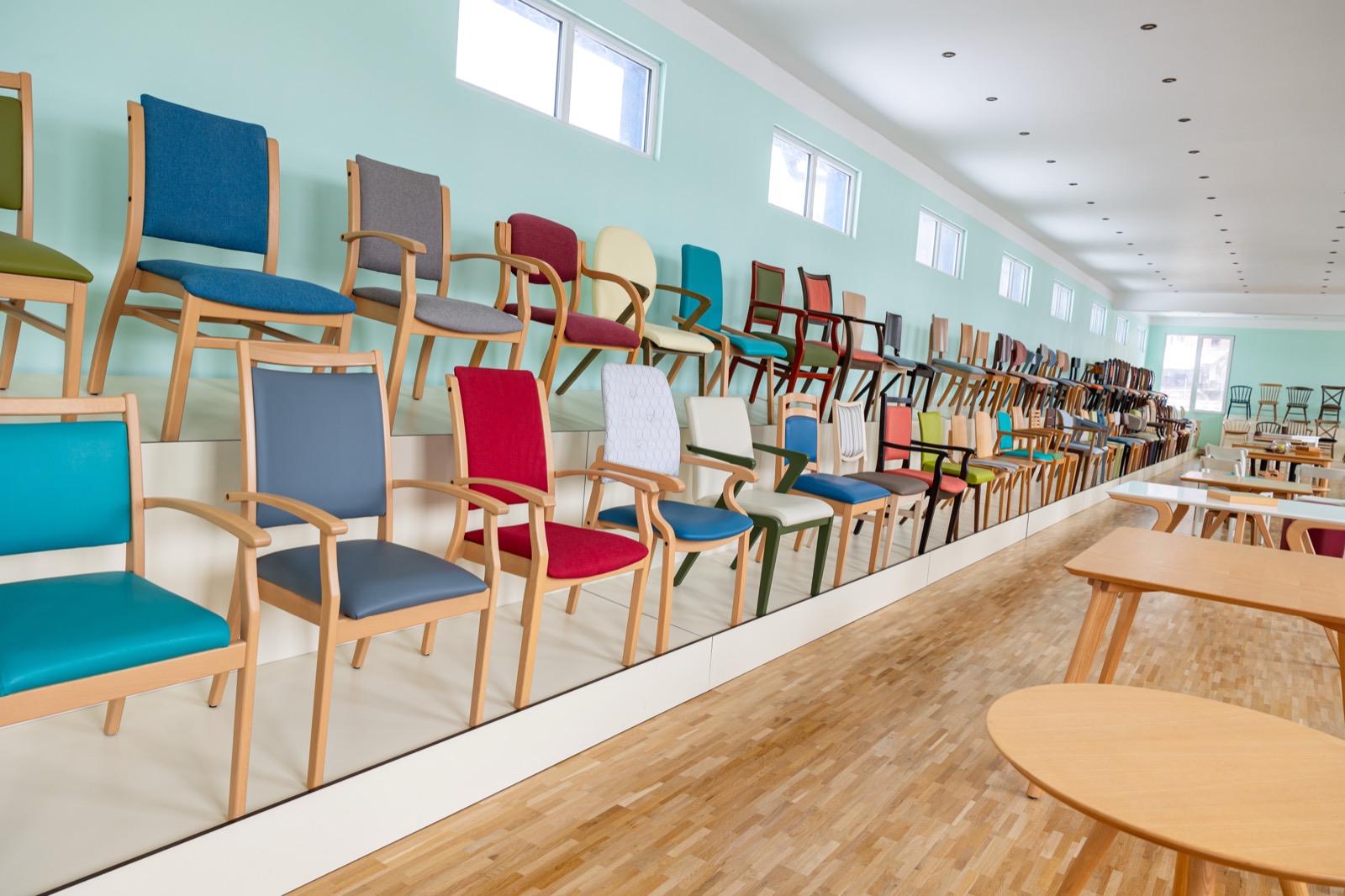
Every chair, armchair and bar stool in our range is listed with two upholstery options (source 5):
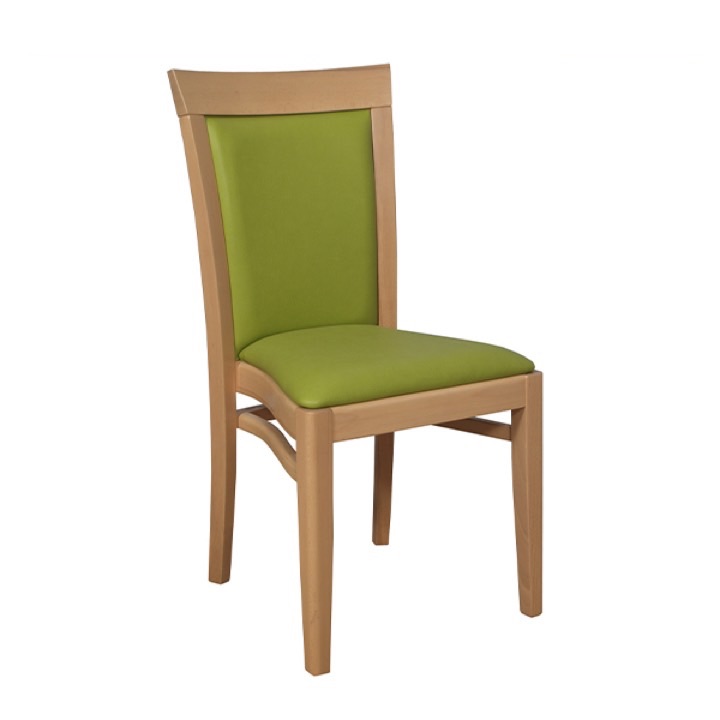
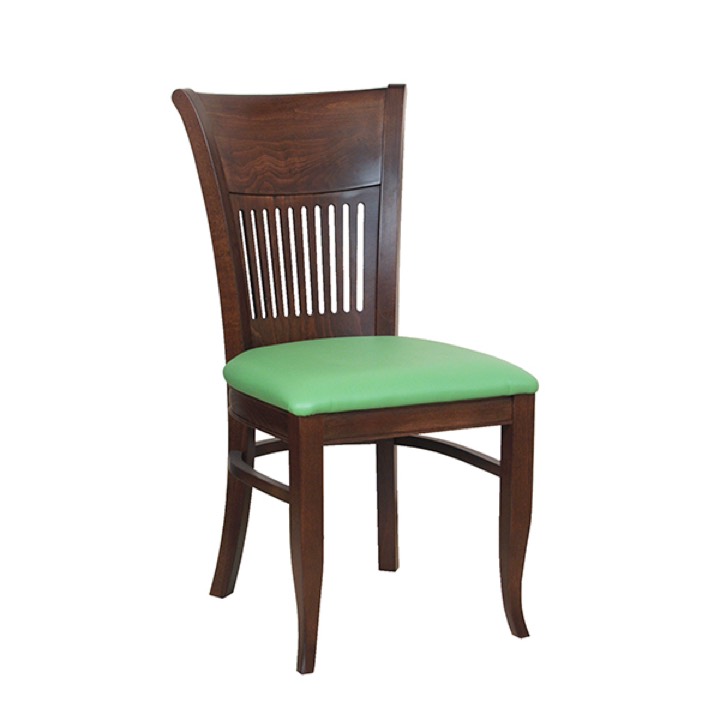
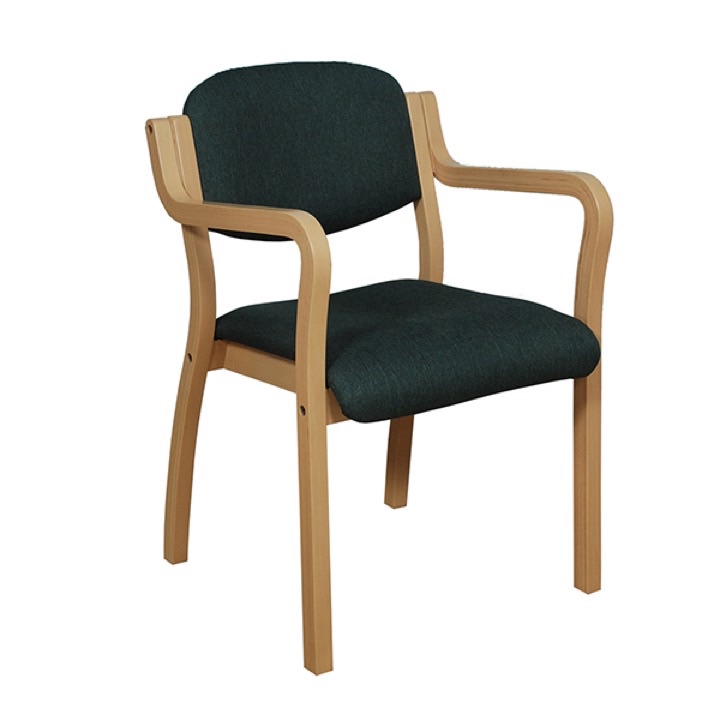
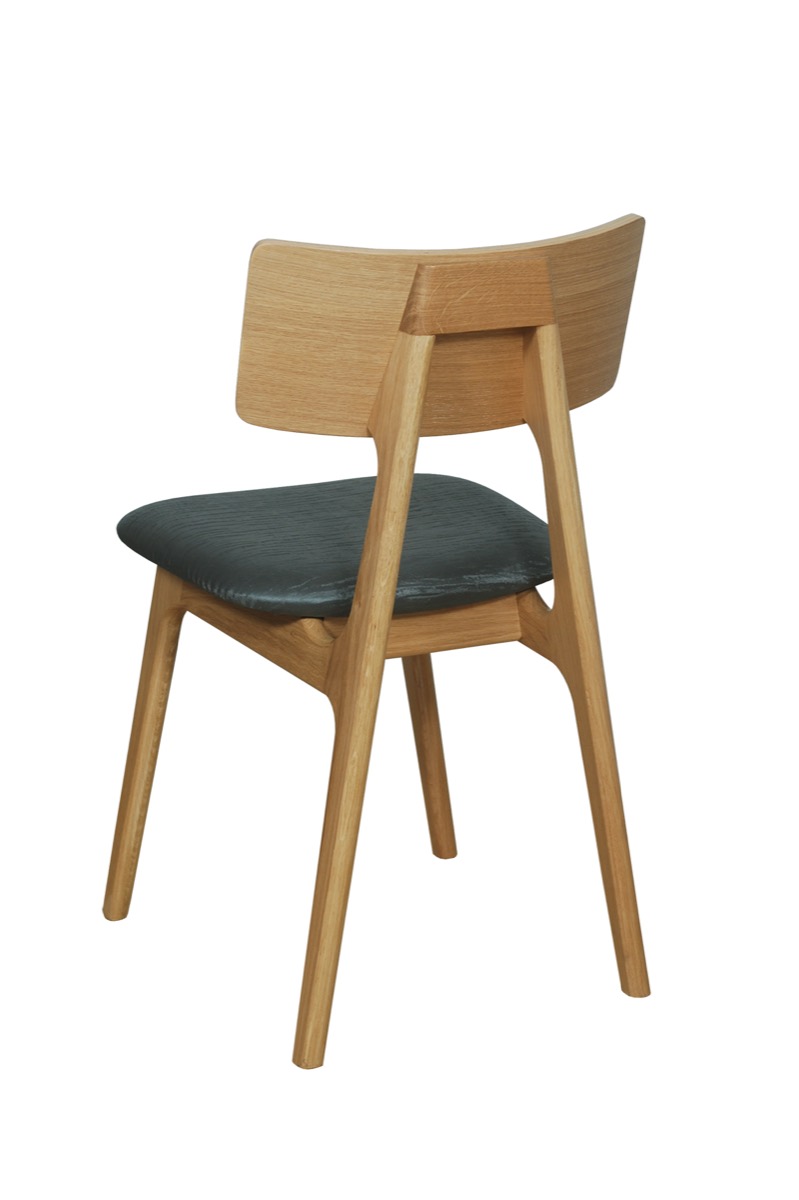
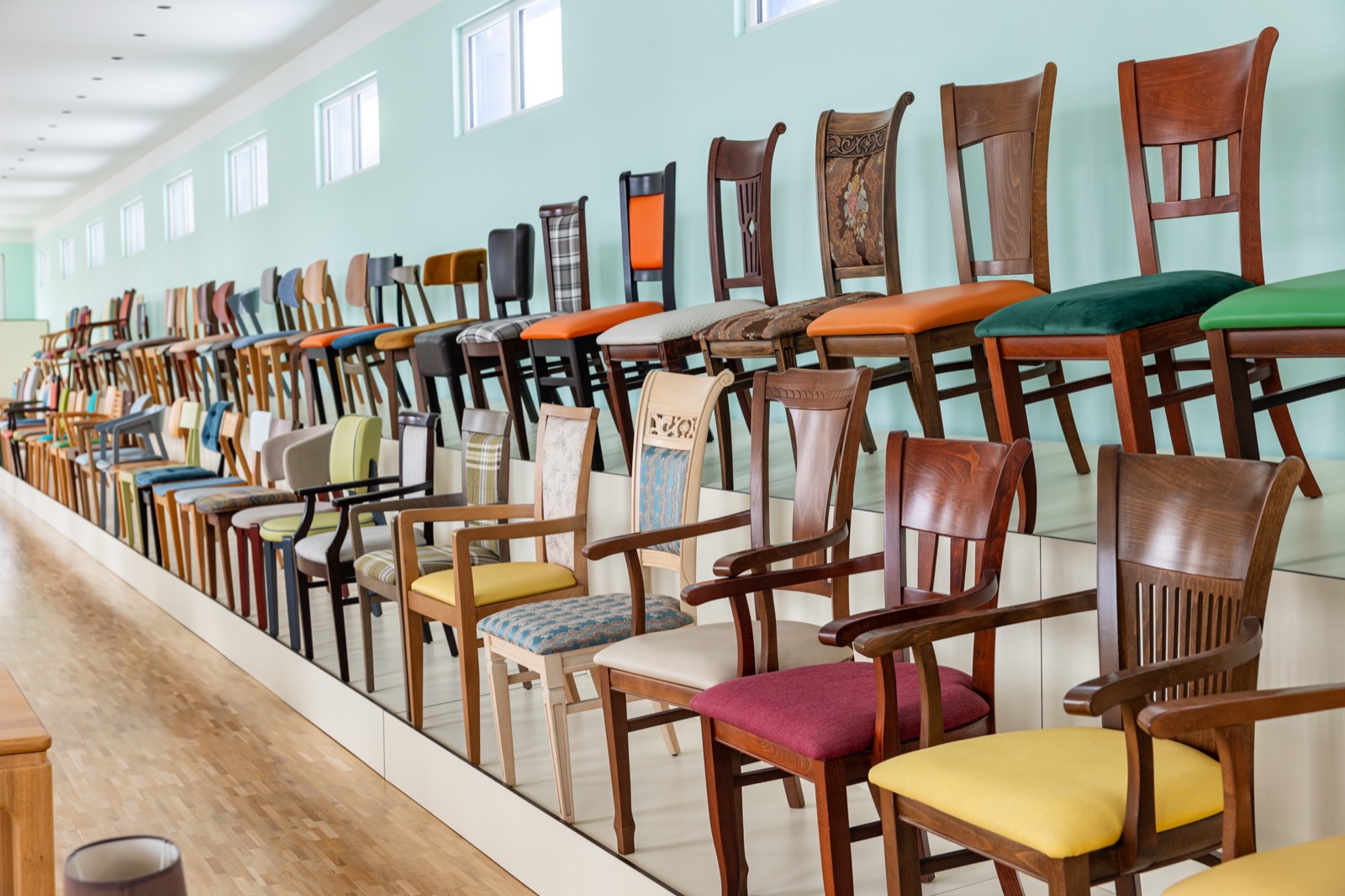
- Faux leather in 7 or 8 colours: black, brown, grey, blue, cream, burgundy, red, and on most models white.
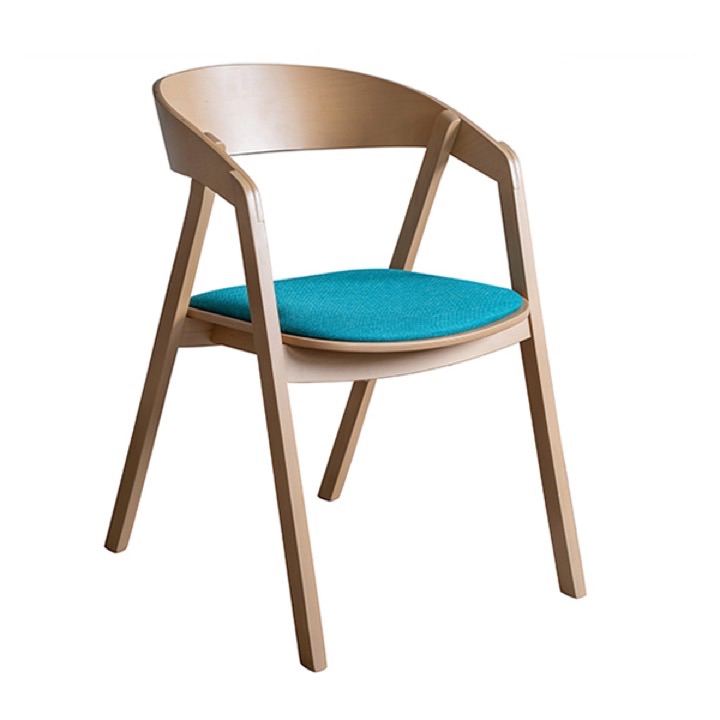
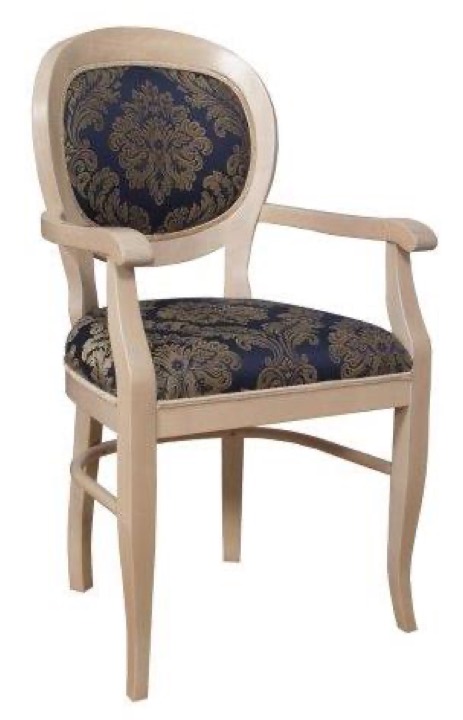
- Fabrics in 7 colours: black, brown, grey, burgundy, cream, gold-green and gold-red.
Other colours are listed "by customer request or sample". Ask us for the material details and test documents of the cover you choose. We offer our chairs to restaurants and hotels, care homes, event rental companies, interior designers, furniture retailers and importers, and we are looking for long-term partners in each of these groups.
Sources
- Jaycee Morrill, Choosing Dining or Banquet Chair Fabric Material, Mity-Lite, 1 February 2024: https://mitylite.com/blog/choosing-banquet-chair-upholstery
- Warwick Fabrics, The Benefits of Vinyl Upholstery Fabrics, 12 February 2024: https://www.warwick.com.au/news/articles/the-benefits-of-vinyl-upholstery-fabrics/
- Provincial Infectious Diseases Advisory Committee (PIDAC), Best Practices for Environmental Cleaning for Prevention and Control of Infections in All Health Care Settings, 2nd edition, May 2012: https://www.picnet.ca/wp-content/uploads/PIDAC_Best_Practices_Environmental_Cleaning_2012.pdf. A 3rd edition was published by Public Health Ontario in 2018.
- Island Health (Vancouver Island Health Authority), Infection Prevention & Control, Furniture best practice guideline: https://www.islandhealth.ca/sites/default/files/2018-08/furniture.pdf
- Upholstery options as published on each model's page on rikostyle.com, November 2026.